The story
Origin
- c. 1000
Northwestern India
- Linguistic and genetic research points to an origin in northwestern India more than a thousand years ago.
- Romani is an Indo-Aryan language.
- There is no surviving original Romani music that can be played as a fossil.
- 1417–1427
Written into Europe
- In 1417 a group is mentioned in Hildesheim.
- In 1420 they are recorded in the Netherlands and Belgium.
- In 1427 a larger party arrives near Paris.
Named styles
- 1711–1827
The restaurant violin
- Czinka Panna (1711–1772) was a named Romani woman bandleader in the Kingdom of Hungary.
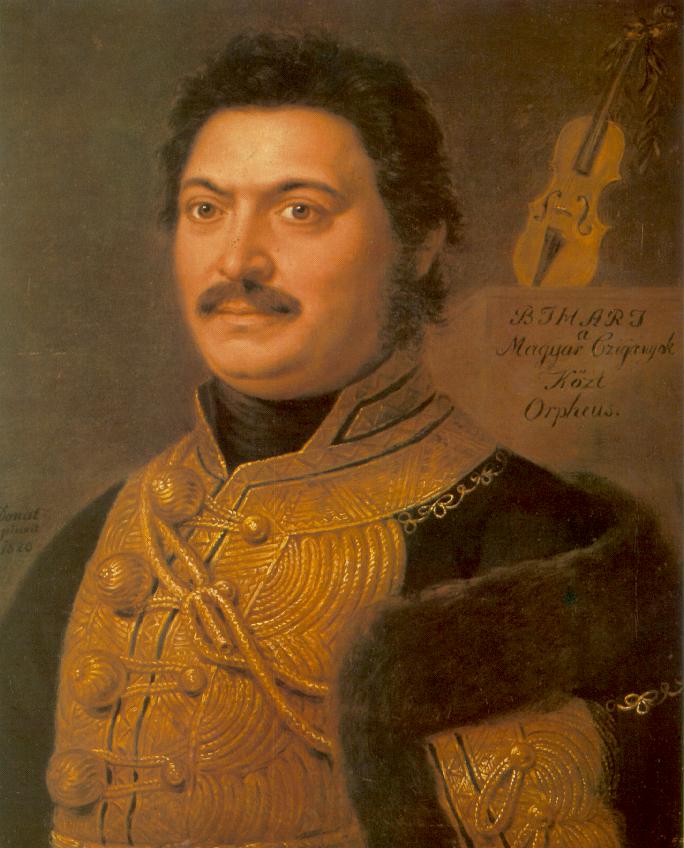
- János Bihari (1764–1827) is the named ancestor of the Hungarian restaurant violin.
- Verbunkos grew as recruiting-dance music. The csárdás is the public dance form.
- Late 18th c.
Choirs and seven strings
- From the late eighteenth century, Romani choirs became a Russian fashion.
- The seven-string guitar was the domestic instrument of this world.
- Theatre Romen in Moscow, founded 1931, is the oldest professional Romani theatre.
- 18th–19th c.
Flamenco named
- Romani people reached Spain in the fifteenth century. They became the Calé.
- By the eighteenth and nineteenth centuries, in Seville, Jerez, Cádiz and later Barcelona, a song form had a public name: flamenco.
- It is Andalusian. It is also Gitano.
- 1850s
The lăutar’s job
- In Wallachia and Moldova the professional musician at a wedding is, more often than not, a Romani lăutar.
- The occupation outlived slavery in the principalities, abolished in the 1850s.
- A taraf is the working unit. Manele is a later urban room of the same profession.
- Long calendar
Brass, clarinet, 9/8
- In the southern Balkans Roma long held the outdoor pairing of zurla and tapan. Brass bands inherited the same calendar: weddings, feast days, funerals.
- Roman communities in western Turkey have been professional musicians since the Byzantine and Ottoman centuries.
- In the Turkish Republic a commercial dance genre took a public name: Roman oyun havası.
Places that paid
- 1934
Django and the Quintette
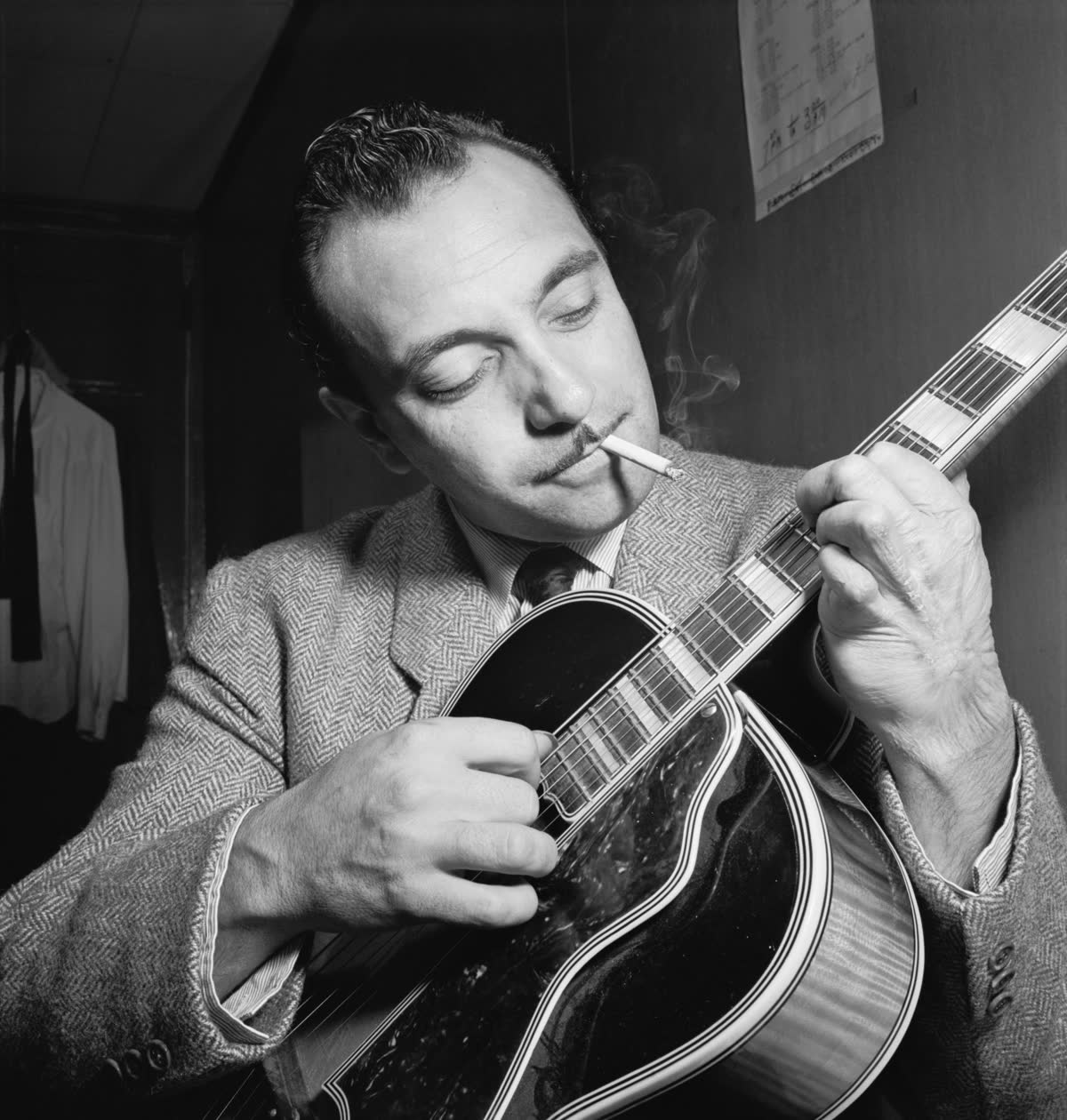
- Jean “Django” Reinhardt, born into a Manouche family, fused the old Sinti family style with the American jazz he heard in Paris.
- With the Quintette du Hot Club de France he created a sound the wider world would recognise.
- Jams and concerts of this family sit on gypsyjazzhub.com. This archive keeps the history.
- 1935–1939
Holland–Hungary
- Hungarian Roma, Romanian Roma and Sinti families arrived in Dutch restaurants.
- They came for rooms that wanted a standing violin: csárdás, hora, Russian standards.
- Veres, Mirando and Serban played the same book. Three families, not one kinship.
After the war
- 1939–1945
The Porajmos
- The music did not pass through the twentieth century unharmed.
- At Auschwitz-Birkenau a family camp held about twenty-three thousand. Almost none of them came home.
- This is why so many German Sinti players of the next generation treated Django’s tunes as survival, not nostalgia.
- 1960s–1990s
New rooms
- Gitano Pentecostal churches, from the 1960s, made alabanzas — praise songs with a flamenco body and a gospel text.
- Kalyi Jag began in Hungary in 1978. Taraf de Haïdouks and Fanfare Ciocărlia walked a local professionalism onto festival stages in the 1990s.
- Manele grew fast after 1989. It is a later urban style, separate from the village taraf.
- Táncház in Hungary from the 1970s: village dance, next to the café book (The Fiddle Channel, 2020).
This archive
- Always
How the music is passed down
- Most of this music never saw a microphone.
- It is learned by ear in the family. Weddings, taverns and restaurants taught the style.
- The family is the archive. Records are what reached a public.
- Now
This archive
- This site is an archive of Romani music.
- Romani musicians play in many countries. The music differs from country to country.
- The catalogue files history, families, artists, and styles. Jazz manouche also has its own site: gypsyjazzhub.com.
What is next
- Open
Add a family
- Musicians who want a family page can write here.
- Living families can send a memory, a date, a photograph.
- A page is published only after we record it under a family.