Hungarian Romani music / Cigányzene
Hungarian Gypsy music · Romani café music · Gypsy violin music · Hungarian Romani music · Cigányzene
Hungary · Slovakia · Transylvania
The urban string-band tradition of the Romungro: a primás on violin, cimbalom, viola and bass. Verbunkos and csárdás became emblems of Hungary itself. The Lakatos families are among its most famous dynasties.
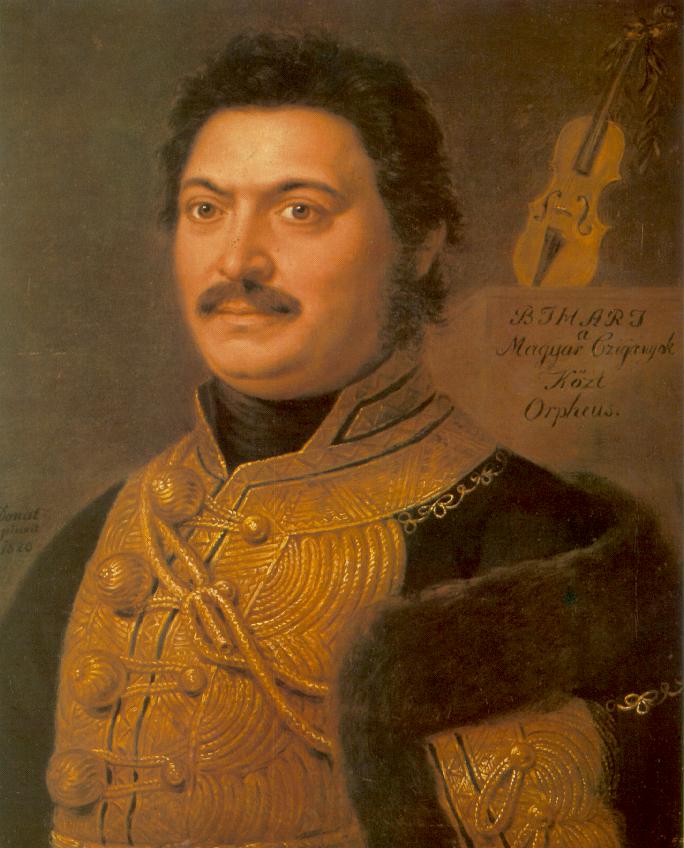

From the late eighteenth century Romani bandleaders in the Habsburg lands professionalised a sound that Hungarians heard as their own national music. Verbunkos (recruiting dances) and the lassú–friss swing of the csárdás were carried by Romani primás players in cafés, courts and restaurants.
Two musical worlds sit side by side in Hungary. Romungro music is professional and instrumental, played for a mixed public. Vlax Romani music is largely vocal, sung in Romani, and kept inside the community — slow loki djili and dance khelimaske gila, with oral bass (percussive vocables) as a hallmark.
The Lakatos family of Budapest is a violin dynasty of the restaurant and concert stage. Roby Lakatos carries the primás line into concert halls and jazz rooms without abandoning the old bow. The guitar here is different — often none — and a cimbalom sits at the centre. Gypsy jazz is another tradition. In the 1930s that same restaurant sound crossed to the Netherlands — see the Holland–Hungary chapter.
The origin argument is still live. Liszt claimed a Gypsy origin for Hungarian music. Bartók, Kodály and Sárosi said the café band was Hungarian popular art music performed by Roma, not Romani music. Petra Gelbart answers that improvisation is composition, and that the denial of Romani agency is a double standard. The Scholars page holds the debate. The 100 Member Hungarian Gypsy Orchestra, founded 1985, still plays the book as a symphony.
Musical training is not one road. Tess Lulu Orban (RomArchive, Hungary) notes that many amateur Romungro and Lovari musicians play by ear and are looked down on for it, while a good number of professional Romani vocalists and instrumentalists have attended major institutions, including the Liszt Academy in Budapest. Both things are true. The café primás was not waiting for a diploma. Some of their grandchildren now have one.
Named chairs of the restaurant book, now with family pages besides Lakatos and Sárközi: Járóka (the master 100 Tagú was founded to honour), Boross (prímáskirály, Kossuth 2006), Danyi and Lendvai Csócsi (living 100 Tagú chairs), Toki Horváth Gyula (Kaposvár, Népművészet Mestere 1954, died Munich 1971), Sánta (100 Tagú founding member; Magyar Nemzeti Cigányzenekar). Magyari Imre and Ernő Toki Balogh are still listed under Later — a lexicon date is not yet a family register. Rinaldo Oláh is a Slovak primás of the same professional world; his family is filed under Slovak song, not as a Budapest restaurant. Fekete Vonat is a 1990s Romani hip-hop name on RomArchive — present-day Central Europe, not the café book.
The Fiddle Channel, 2020, Hungarian Gypsy Music? walks the Liszt–Bartók fight and dates rooms this page had not yet filed: 1423; a 1683 noble’s fiddler; Mihály Barna 1737 (Sárosi doubts the name); Rózsavölgyi’s first csárdás, 1835 — Jewish, not Romani; Monti 1904; táncház from the 1970s. Tcha Limberger speaks at the end. Full walk on the Hungary chapter. No new family from the film until origin and sources are recorded.
Magyar nóta and the brács.
Magyar nóta sits in the same café book as verbunkos and csárdás: authored urban song and dance pieces, carried by a Romani string band.
The primás leads. The brács (viola / kontra) answers with chordal rhythm.
Limberger’s note on the Hankó–Boross tape: in this practice the band follows the speed and position of the primás’s bow — not a fixed written pulse.
Tempo can slow and speed without a count-in. That is why a brács player who cannot see the bow arm is a challenge.
A clean Hankó–Boross home tape became a teaching copy in Budapest.
History
What much of Europe heard as “Hungarian music” was, for two centuries, played by Romani professionals. Verbunkos, csárdás, the café primás, the cimbalom — and dynasties such as the Lakatos families of Budapest.
Two worlds in one country
Hungary holds more than one Romani musical world. The Romungro — long-settled, Hungarian-speaking — supplied the professional string bands of towns and restaurants: verbunkos, csárdás, magyar nóta, a primás-led string band with cimbalom. The Vlax, speaking Romani, kept a largely vocal, inward repertoire: slow loki djili and dance khelimaske gila, with oral bass in some families. Boyash songs sit beside that inward line. Hungarians rarely asked to hear either at dinner.
Confusing these with gypsy jazz is the most common error on this map. There is no Selmer, no pompe, no Hot Club. There is a primás, a cimbalom, and a contract to make a room of diners feel that Hungary is singing.
Verbunkos and csárdás
Verbunkos grew as recruiting-dance music in the eighteenth century and became a national idiom. The csárdás, with its slow lassú and fast friss, is the public dance form. Hallgató — music for listening — is the slow, rubato violin line that a primás stretches over cimbalom and bass.
Franz Liszt’s Hungarian Rhapsodies and Brahms’s dances took this professional Romani style into the concert hall, often under the label “Gypsy.” Liszt went further: he claimed a Gypsy origin for Hungarian music. Bartók and Kodály later reversed that claim. Village peasant song, they said, was the true Hungarian folk; urban café “Gypsy music” was Hungarian popular art music performed by Roma — a different thing, and in their writing often a lesser thing. Bartók described Gypsy performance as destroying the unity of folk song by turning vocal pieces instrumental.
Bálint Sárosi catalogued the restaurant band more carefully than anyone, and still promoted the idea that “Gypsy music” is not, in fact, Romani music — except the Vlax vocal variety he barely mentioned. Petra Gelbart, on RomArchive, calls that a double standard: if an improvisation sounds notably different from the original, that too is composing. Roma took harmonic structure from mainstream practice; the melodic and rhythmic development of the café style has been shaped by Romani traditions for generations. This archive files the primás as a maker, not a copyist. The full argument is on the Scholars page.
The players themselves were already playing nóta, opera tunes, waltzes and whatever the paying table asked. A living band is a library, not a museum label. IMSLP holds the public-domain Liszt rhapsodies and Brahms dances — reception history, not field tradition.
Limberger on Magyar nóta (musician’s testimony)
Tcha Limberger (Belgian Manouche; Limberger family on this archive) describes Magyar nóta from the Budapest café chair he went to learn — not from Western Manouche menu cards. Jimmy Grant interview, https://youtu.be/CSGObB0WIqw. This is one musician’s testimony. It sits beside Sárosi, Gelbart, and the Fiddle Channel. It does not replace them.
Band. Primás violin; a second violin on inner voices and double stops; brács (viola / kontra — the chordal rhythm that often disappears into the texture until it stops and the band feels cut in half); cimbalom with hammers; double bass; cello; often clarinet. He points to a Hankó Ferenc (brács) / Boross Lajos (violin) home tape as a teaching copy for brács players — see the Boross family. The tape itself is filed there (https://youtu.be/8Mw2Ay4FBSE).
How the book was made, in his telling. In the nineteenth century Hungarian nobility wanted a national upper-class music — not Viennese / Mozart, not peasant village song. They hired Romani musicians and had them trained in classical technique to play the new style. After that, he says, it has been Romani professionals who play it. Asked if that makes it “Gypsy music,” he will not settle the label.
Two unfairnesses. Bartók and Kodály rang the alarm when nóta crowded out village music — he agrees losing the village would be a pity. Today purists call nóta “artificial folk.” He compares Portuguese fado: also composed and urban, not thousand-year village song, yet not dismissed that way. He likes both village music and Magyar nóta.
Magyar nóta = Hungarian song, built with classical violin / bass / cello / clarinet technique into a folklore-like public sound.
The Lakatos families
Among Budapest’s Romani violin dynasties the Lakatos name is one of the most widely recognised. Named chairs: János Bihari (1764–1827) as ancestor; Sándor Lakatos, the mid-century primás Roby called the most famous of the family; Antal Lakatos, Roby’s father, café bandleader in Budapest; Roby Lakatos (b. 1965), seventh generation, years in Belgium; Sándor Déki Lakatos and Sándor Déki Lakatos Jr., the recorded restaurant line; Béla Szakcsi Lakatos (1943–2022), jazz piano.
The Sárközi family sits in the same city: Lajos Sárközi Sr. and Jr., Rudolf Sárközi on bass, József Sárközi of the Rajkó Orchestra. Lajos Jr. still plays the Százéves Étterem. The Dutch primás Lajos Veres was born István Lajos Sárközi. Full registers are under Families.
The 100 Member Hungarian Gypsy Orchestra — 100 Tagú Cigányzenekar — was founded in 1985 as a tribute to the primás Sándor Járóka Sr. It debuted at the Budapest Spring Festival in 1986, was listed among the Hungarikums in 2014, and still plays the restaurant book as a symphony: Liszt and Brahms beside csárdás and nóta. A living public face of the same profession, not a village band.
Named chairs of the restaurant book, besides the Lakatos and Sárközi families: Járóka, Boross, Toki Horváth, Sánta, Danyi, Lendvai Csócsi, Veres, 100 Tagú Cigányzenekar. Magyari Imre is still on Later (birth day disagrees). Rinaldo Oláh is a Slovak primás of the same professional world.
Czinka Panna (1711–1772) stands at the far end of the same professional story: a named Romani woman bandleader in the eighteenth-century Kingdom of Hungary, proof that the orchestra was already a Romani occupation before the word “csárdás” was a tourist poster. In the 1930s that same sound crossed the North Sea. The Dutch chapter is next door.
Musical training is not one road. Tess Lulu Orban (RomArchive, Hungary) notes that many amateur Romungro and Lovari musicians play by ear and are looked down on for it, while a good number of professional Romani vocalists and instrumentalists have attended major institutions, including the Liszt Academy in Budapest. Both things are true. Fekete Vonat is a 1990s Romani hip-hop name — present-day Central Europe, not this café book.
Vlax song inside the same borders
Loki djili and khelimaske gila — slow song and dance song — are the other Hungarian Romani music. Often unaccompanied, often in Romani, with oral bass in some families. Imre and Sándor Csenki collected this repertoire from 1940 because it was not the café music foreigners had already decided was “Gypsy.” Katalin Kovalcsik later mapped Vlach and Boyash song in Hungary, Slovakia and southern Poland. Both the restaurant book and this inward song belong in the atlas. Only one was hired to play dinner.
What one film walks
The Fiddle Channel, 2020: Hungarian Gypsy Music? The word Gypsy is their title. The captions are auto-generated. Names below are checked against this archive, not copied from the machine. The film walks the same Liszt–Bartók–Kodály fight already on this page. It also dates rooms this chapter had not yet filed.
The film: Romani people in Hungary from the fifteenth century; a king granted freedom of movement in 1423. A 1681 preacher wanted violins cut in two and hung on willow trees, and the players beside them. By 1683 a Hungarian writer called a Gypsy fiddler an essential part of a nobleman’s entourage. The first named bandleader the film gives is Mihály Barna (Barnabás), a 1737 quartet of second violin, harp and bass. The film itself notes Sárosi’s doubt: that grandfather may be fictitious, and Rákóczi may have had no Gypsies in his retinue. This archive already files Czinka Panna (1711–1772). The Rákóczi March is not her work (Magyar életrajzi lexikon).
Verbunkos, the film says, from the 1760s recruiting dances: lassú then friss; ornament; bokázó, the heel-click phrase; and the so-called Hungarian Gypsy scale — harmonic minor with a raised fourth, two augmented seconds — which Kodály and Bartók treated as a falsification of peasant song. Gelbart’s answer is already on this page: the primás is a maker.
Márk Rózsavölgyi, the film says, wrote the first csárdás in 1835. He was born Mordecai Rosenthal. He and his ensemble were Jewish, not Romani. The restaurant book is not only a Romani authorship. Monti’s Csárdás, 1904, became the csárdás the world knows. Dinicu’s Hora staccato and Ciocârlia (The Lark) entered the same stand as standards. A report the film cites from 1892: a band moving from Gyula to Arad was beaten and run out by the resident musicians.
Bartók, 1904: a neighbour’s maid singing The Red Apple Has Fallen in the Mud. From 1906, Edison cylinders. The film gives a total of about ten thousand tunes, many from Hungarian-speaking Transylvania. After 1946 the state kept Romani restaurant work in the cities. Rajkó, 1952, Gyula Farkas — already on the Sárközi and Danyi pages. The Hungarian State Folk Ensemble, 1951, the film says, ran two bands in one show: restaurant Gypsy music and village tunes.
Táncház, from the 1970s. Sándor Timár wanted live village music, not a state or restaurant band. Béla Halmos and Ferenc Sebő opened a dance house. György Martin is the dance collector the film names. Muzsikás formed 1972 — a non-Romani revival band. The film names a Romani source band in Bogyiszló, primás Kiss János Ökrös, recorded by Sebő for Hungaroton in 1983. No family page until origin and sources are recorded.
The film ends with Tcha Limberger, a Belgian Manouche player of Magyar nóta, not a Hungarian Romungro. Auto-caption: “Charlinberger.” He is the Limberger family already in this archive. He told the film: Magyar nóta is high-level music making; it may be artificial folk and still be incredible; most Romani people play the music of the country they live in. That is this site’s map in one sentence. The Limberger family stays Sinti/Manouche. The book he studied in Budapest stays Hungarian.
Key players
- 1711–1772 (?)
Czinka Panna
- Violin · Kingdom of Hungary
- Czinka Panna. MEK: Sajógömör, 1711; death 1772, with a question mark. Violinist of a popular band of her time. Sárosi (Gypsy Music, 1978, p. 71) regards her as the first Hungarian Gypsy primás in the modern sense — his claim, not a parish register.
- 1764–1827
János Bihari
- Violin · Kingdom of Hungary
- Bihari János. Lexicon: Nagyabony, 21 October 1764 — Pest, 26 April 1827. Verbunkos violin. Around 1801 a five-piece band in Pest. Liszt heard him in 1822. 1824: left arm broken, primás chair given up. Rákóczi March as his work is an unproven assumption in the same lexicon.
- 19th–21st c.
The Lakatos families
- Violin dynasties · Hungary
- Named chairs: János Bihari (ancestor), Sándor Lakatos (mid-century primás), Antal Lakatos (Roby’s father), Roby Lakatos (b. 1965), Sándor Déki Lakatos and Jr., Béla Szakcsi Lakatos (jazz piano).
- 1894–1940
Magyari Imre
- Violin, primás · Hungary
- Debrecen, 10 September 1894 — Budapest, 27 April 1940. Hungária Szálló.
- 20th–21st c.
Sándor Déki Lakatos
- Violin, primás · Hungary
- Recorded restaurant orchestra — Déki Lakatos and his Gypsy Band. Another Lakatos chair. His son Sándor Déki Lakatos Jr. carries the band.
- 20th c.
Sándor Lakatos
- Violin, primás · Hungary
- Mid-century primás of the Lakatos restaurant family. Roby named him the most famous violinist of the family.
- 20th–21st c.
The Sárközi family
- Violin dynasties · Hungary
- Lajos Sárközi Sr. and Jr., Rudolf Sárközi (bass), József Sárközi of the Rajkó. Százéves Étterem, Budapest. The Dutch Lajos Veres was born István Lajos Sárközi.
- 1920–1971
Toki Horváth Gyula
- Violin, primás · Hungary / Germany
- Kaposvár, 17 September 1920 — Munich, 13 October 1971. Left Hungary 1956.
- 1922–1984
id. Járóka Sándor
- Violin, primás · Hungary
- Kisvárda, 16 February 1922 — Budapest, 11 April 1984. The master the 100 Tagú was founded to honour.
- 1925–2014
Boross Lajos
- Violin, primás · Hungary
- Budapest, 7 January 1925 — 8 July 2014. Perpetual honorary főprímás of the 100 Tagú. A home tape with Hankó Ferenc (brács), Dutch tour, 1960s in Limberger’s telling. Tcha Limberger uploaded a clean transfer on 9 December 2020.
- 1945–2024
ifj. Sánta Ferenc
- Violin, primás · Hungary
- Kaposvár, 2 March 1945 — 22 October 2024. Magyar Nemzeti Cigányzenekar.
- 1954–2007
ifj. Járóka Sándor
- Violin, primás · Hungary
- Budapest, 30 September 1954 — 18 September 2007. Knight’s Cross 2003.
- b. 1965
Roby Lakatos
- Violin · Hungary / Belgium
- Son of Antal Lakatos, nephew of Sándor. Seventh generation. Café band from nine. Decades in Belgium, then concert halls. Csárdás first. He can play Django. He is not a Django player.
- late 20th c.–
Lajos Sárközi Jr.
- Violin, primás · Hungary
- Taught by Lajos Sr. Liszt Academy. Band: Sr. second violin, Rudolf Sárközi bass, Gyula Bóni viola, Gyula Csík cimbalom. Százéves Étterem. Chief primás, Hungarian Gypsy Philharmonic, 2015.
- founded 1985
100 Member Hungarian Gypsy Orchestra
- Symphony orchestra — cigányzene · Hungary (Budapest)
- 100 Tagú Cigányzenekar. Founded 1985 as a tribute to the primás Sándor Járóka Sr. Debut concert at the Budapest Spring Festival, 1986. On 18 March 2014 included in the Collection of Hungarikums. Today 138 members; 21 CDs and 5 DVDs (8 platinum, 14 gold). György Cziffra was honorary president for life. Hungarian Heritage Award and a Guinness listing, 2000. The restaurant book played as a symphony: Liszt and Brahms beside csárdás and nóta. A living public face of the Romungro profession, not a village band.
- —
Hankó Ferenc
- Brács · Hungary
- Named as the brács on a private tape with Boross Lajos. Tcha Limberger uploaded a clean transfer on 9 December 2020. Dutch tour, 1960s, Limberger believes. Birth and death are not filed. Not listed as Boross kin.
- living
Johan János
- Violin, primás · Hungary (Budapest)
- First-person: orchestra from 2005; 100 Tagú leading primás 2012–2025; from 2026 főprímás of the Magyar Nemzeti Cigányzenekar.
Families of this style
- Lakatos — Hungarian Roma — Budapest (and Belgium, for a time)
- Sárközi / Sárközy — Hungarian Roma — Budapest
- Czinka — Hungarian Roma — Kingdom of Hungary, eighteenth century
- Járóka — Hungarian Roma — Kisvárda / Budapest
- Boross — Hungarian Roma — Budapest
- Danyi — Hungarian Roma — Budapest
- Lendvai Csócsi — Hungarian Roma — Ménfőcsanak / Budapest
- Oláh (Rinaldo) — Slovak Roma — Zvolenská Slatina
- Toki Horváth — Hungarian Roma — Kaposvár
- Sánta — Hungarian Roma — Kaposvár / Budapest
- Magyari — Hungarian Roma — Debrecen / Budapest
- Bihari — Hungarian Roma — Nagyabony / Pest, 1764–1827
- Johan — Hungarian Roma — Budapest, living chair